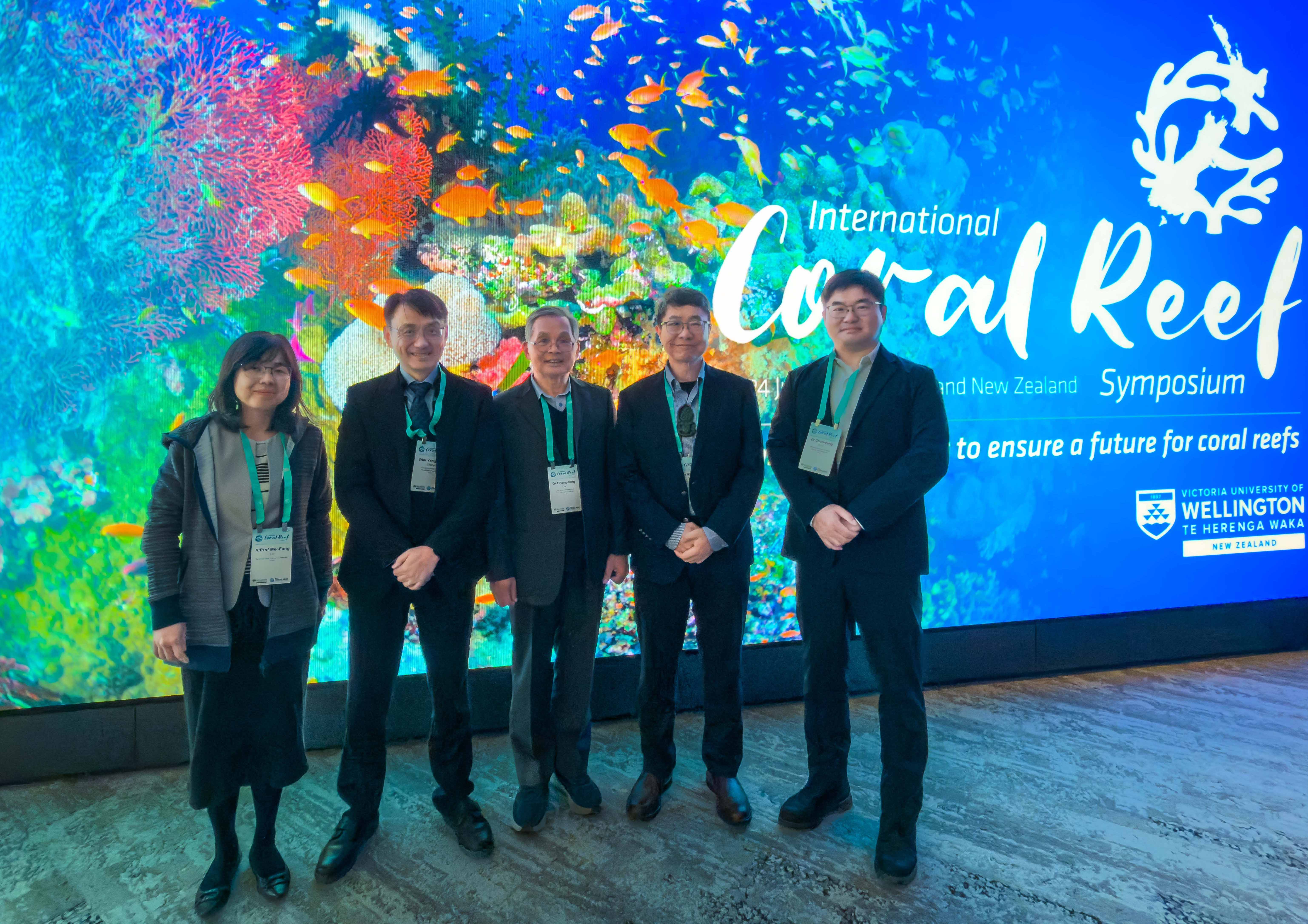
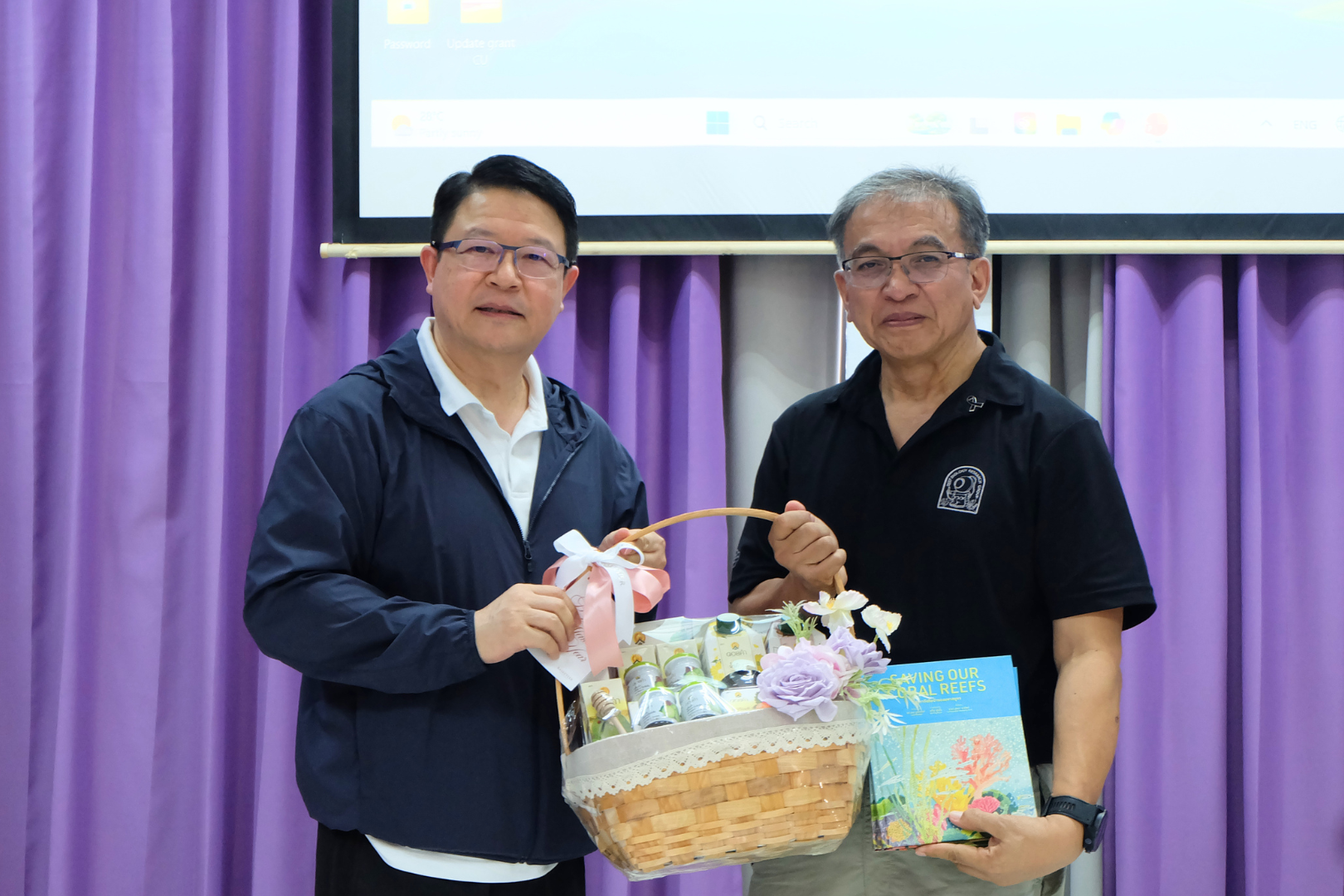
As climate change continues to threaten coral reefs worldwide, coral conservation and restoration have become more urgent than ever. To encourage young researchers to advance coral science and marine conservation, Delta presented its first Delta International Symposium on Coral Restoration (DISCR) Paper Award at the Taiwan International Coral Reef Symposium, held at National Sun Yat-sen University in June.
The doctoral award was presented to Savanna Wen-Hua Chou from the Taiwan International Graduate Program (TIGP) on Biodiversity, Academia Sinica (supervised by Dr. Allen Chao-lun Chen), while the master's award went to Yi-Yuan Lin from the Department of Marine Biotechnology and Rsources, National Sun Yat-sen University (supervised by Prof. Mei-Fang Lin). Their research focuses on coral biodiversity and coral thermal tolerance, providing valuable scientific insights for coral conservation, restoration, and climate adaptation.
Chou's study examined Acropora corals across Taiwan and East Asia over a decade of field surveys. The research revealed that several reef-building corals previously considered a single species are, in fact, composed of multiple genetically distinct cryptic species. The findings improve our understanding of coral evolution in East Asia, confirm Taiwan's importance as a coral biodiversity hotspot, and provide valuable information for future coral conservation planning under climate change.
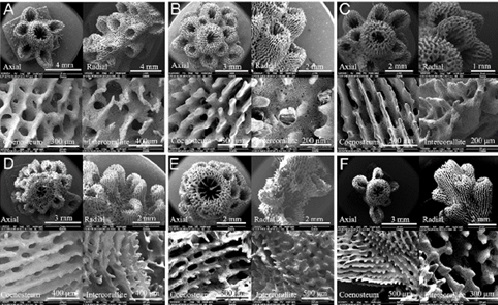
A scanning electron microscope (SEM) image of an Acropora coral specimen studied by doctoral award recipient Savanna Wen-Hua Chou.
Lin's research used RNA transcriptome analysis and long-term seasonal field surveys to investigate how corals near the thermal discharge outlet of Taiwan's Third Nuclear Power Plant adapt to elevated seawater temperatures. The study identified molecular mechanisms that contribute to coral heat tolerance and provides an important scientific foundation for coral restoration, selective breeding, and conservation management.
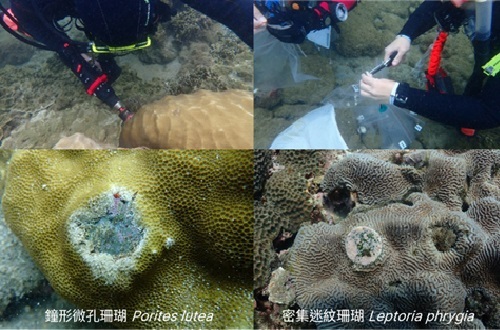
Master's award recipient Yi-Yuan Lin collected coral short-core samples using an underwater drill. The sampling holes were then backfilled with recycled oyster shell limestone powder to prevent biofouling, allowing the corals to heal naturally within three to six months.
Biodiversity conservation is a long-term commitment for Delta. Through its Coral Restoration Program and the Delta International Symposium on Coral Restoration (DISCR), Delta brings together leading coral researchers and conservation organizations from around the world to share the latest restoration technologies and strengthen international collaboration. In addition to supporting young scientists through research awards, Delta continues to work with partners on coral conservation, restoration, and talent development, with the goal of conserving more than half of Pacific coral species by 2030 and building a more resilient future for the ocean.
Notes
1. Chen's Line is a biogeographical boundary that separates the tropical coral reef ecosystems of southern Taiwan from the temperate marine environments of northern Taiwan. It helps explain coral distribution, community structure, and evolutionary history in Taiwan and surrounding waters.
2. Cryptic species are species that appear almost identical in morphology but are genetically distinct. Correctly identifying cryptic coral species is essential because different species may respond differently to environmental change, enabling more effective conservation strategies.